
The true economic impact of travel nurses, especially in 2026, challenges previous assumptions about healthcare staffing costs. Travel nursing is a strategic workforce solution that provides hospitals with critical staffing flexibility. It helps maintain patient care levels and optimizes operational budgets by offering a more cost-effective alternative to permanent hires when all factors are considered.
Key Characteristics:
Adaptability: Hospitals quickly adjust to fluctuating patient demands.
Cost Efficiency: Fully loaded costs are often lower than permanent staff.
Patient Outcome Improvement: Prevents understaffing, boosts care quality.
Workforce Stability: Fills critical gaps, avoiding service reductions.
Hospital administrators often focus solely on the higher hourly wages of contingent staff. But this narrow view misses the broader picture of healthcare staffing economics. Neglecting the full financial burden of permanent staff can create unexpected deficits in hospital finance.
By the end of this guide, you will understand the comprehensive travel nurse economic impact on hospitals, enabling smarter staffing decisions without compromising budget integrity or patient care standards.
Understanding the True Cost of Travel Nurses
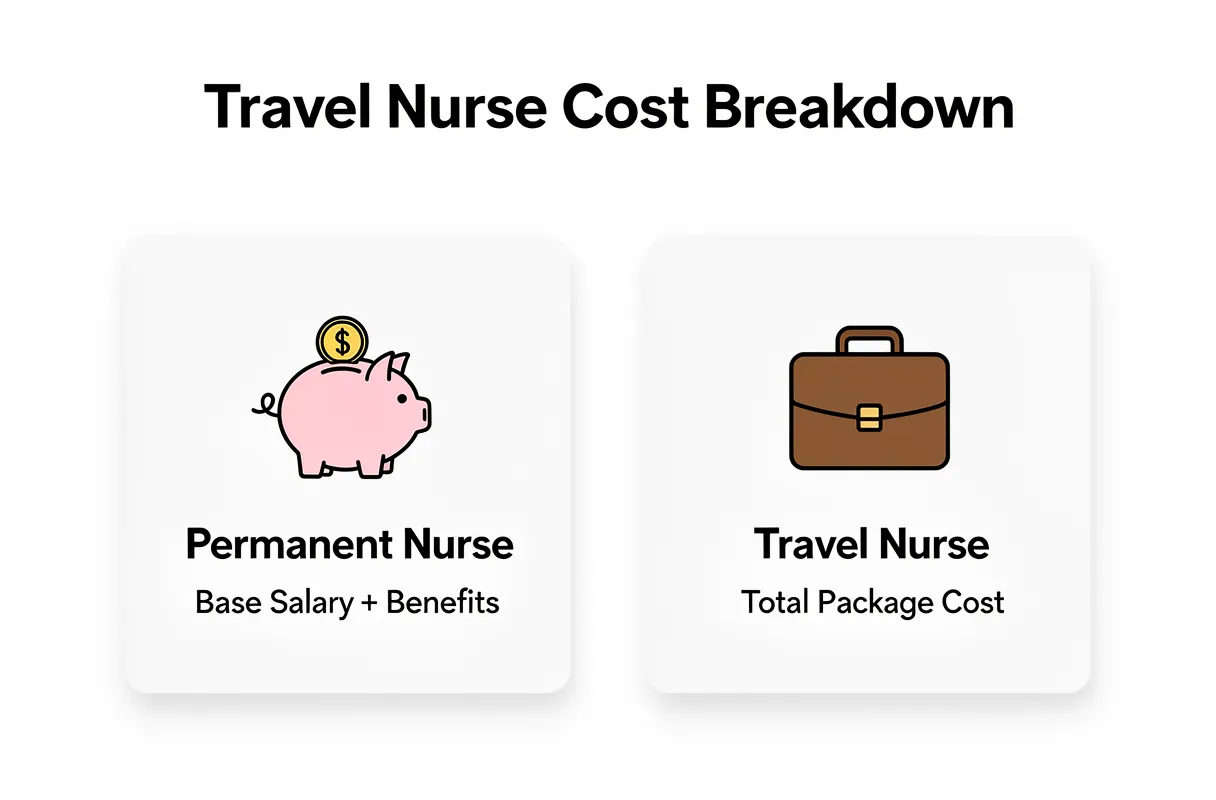
For years, hospital administrators believed travel nurses were the pricier option for staffing. This perception often stemmed from a narrow focus on their higher hourly wages alone. However, a deeper analysis reveals a more nuanced reality in healthcare staffing economics.
A significant 2026 Cost of Labor Study by KPMG, commissioned by NATHO, directly challenges this assumption. The research found that the average fully loaded hourly cost for a travel nurse was $89. This is notably lower than the $94 per hour average for permanent nurses.
This difference highlights the importance of examining fully loaded costs. For permanent staff, these include not just wages but also extensive benefits packages, recruitment expenses, ongoing training, and administrative overhead. For travel nurses, while their base pay may be higher, many of these associated permanent staff costs are significantly reduced or handled by the agency. Looking only at the gross wage paints an incomplete picture and can mislead hospital finance decisions.
Detailed Cost Comparison: Travel vs. Permanent Staff
For years, a widespread assumption held that travel nurses were more expensive than permanent staff. This overlooks the fully loaded costs associated with both models. Permanent nurses involve significant expenses beyond their base salary.
These include benefits packages (health insurance, retirement contributions, paid time off), recruitment fees, onboarding, ongoing training, and administrative overhead like FICA and unemployment insurance. For permanent staff, these costs can push the fully loaded hourly rate substantially higher.
A 2026 Cost of Labor Study by KPMG, commissioned by the National Association of Travel Healthcare Organizations (NATHO), directly challenges this assumption. The study found the average fully loaded hourly cost for a travel nurse was $89, compared to $94 per hour for permanent nurses. This difference highlights the importance of examining fully loaded costs, which include not just wages but also extensive benefits packages, recruitment expenses, ongoing training, and administrative overhead. For travel nurses, while their base pay may be higher, many of these associated permanent staff costs are significantly reduced or handled by the agency.
Cost Component | Travel Nurse (Fully Loaded Hourly) | Permanent Nurse (Fully Loaded Hourly) | Notes |
|---|---|---|---|
Base Wage | $55.00 | $45.00 | Varies by specialty and location. |
Benefits (Health, PTO) | $15.00 (Agency Provided) | $25.00 (Employer Provided) | Includes insurance premiums, retirement match, PTO accrual. |
Recruitment & Onboarding | $5.00 | $10.00 | Agency handles most recruitment; hospital handles onboarding. |
Administrative Overhead | $14.00 | $14.00 | Includes FICA, unemployment, workers' comp, IT support. |
Total Estimated Cost | $89.00 | $94.00 | Based on 2026 KPMG/NATHO Cost of Labor Study findings. |
Looking only at the gross wage paints an incomplete picture and can mislead hospital finance decisions. For a deeper understanding of these findings, review the 2026 KPMG/NATHO Cost of Labor Study. This data confirms that strategic use of travel nurses can offer significant financial advantages when all factors are considered.
Broader Economic and Operational Impact
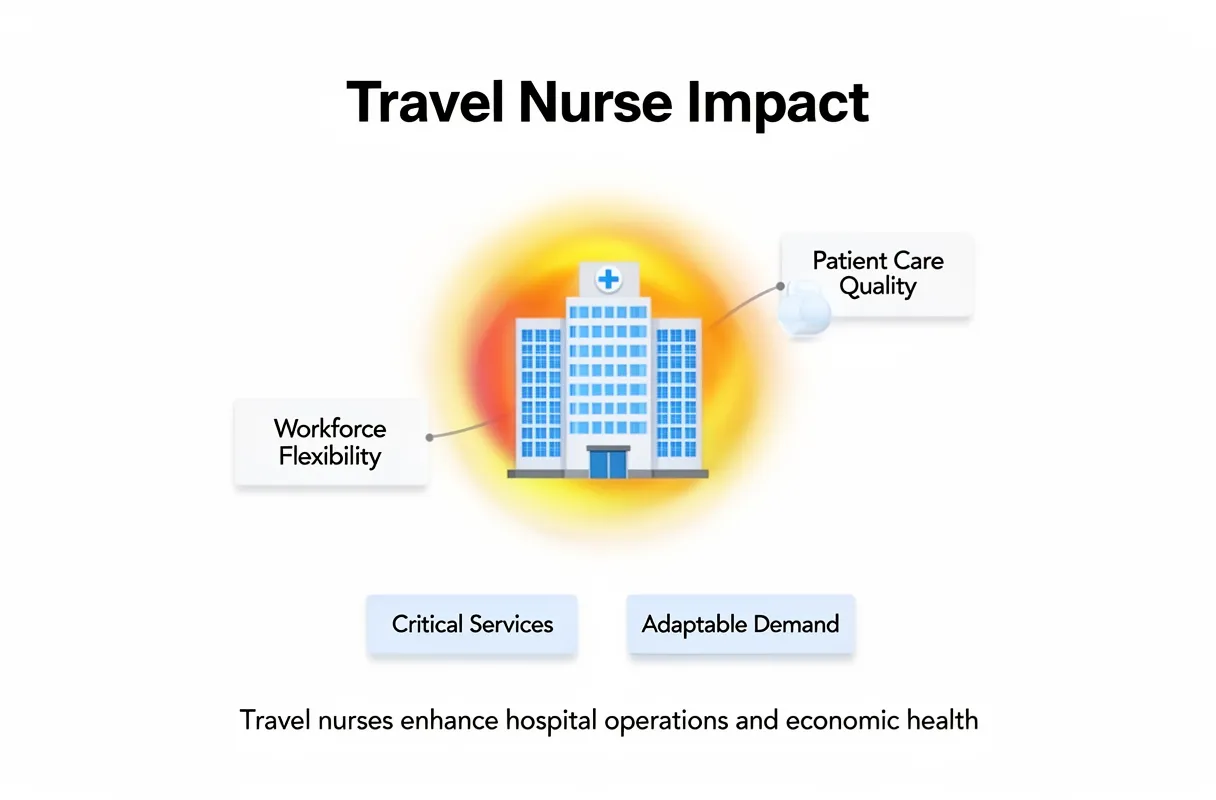
The value of travel nurses extends far beyond their direct hourly rate, significantly impacting hospital operations and the broader healthcare landscape. These professionals are essential for maintaining consistent patient care quality and enabling healthcare systems to respond agilely to fluctuating demands. Their presence prevents understaffing, which directly correlates with improved patient outcomes and can reduce costly readmissions.
Travel nurses are a key component in bridging the gap created by persistent healthcare staffing challenges. Post-COVID-19, factors like an aging population and increased burnout have intensified these shortages. Projections from the American Association of Colleges of Nursing indicate a potential deficit of 63,720 full-time registered nurses by 2030. This underscores the critical role travel nurses play in ensuring continuous service delivery.
Their integration into healthcare staffing strategies is substantial, with approximately 1.75 million nurses working as travelers. This high volume highlights their integral status.
Key impacts include:
Sustained Critical Services: Travel nurses ensure hospitals, especially in high-demand regions like California, Texas, and Florida, can manage patient volume surges and maintain essential services that might otherwise be strained or suspended.
Enhanced Workforce Mobility: Facilitated by initiatives like the Nurse Licensure Compact (NLC), travel nursing significantly increases the ability to deploy skilled staff where they are most needed, reducing administrative friction for both hospitals and agencies.
Local Economic Stimulus: Beyond hospital walls, travel nurses contribute to local economies through their spending on housing, food, and services, bringing new revenue streams to communities.
Reduced Administrative Burden: For hospitals, utilizing travel nurses often means outsourcing the complexities of recruitment, onboarding, and credentialing, freeing up internal resources.
The strategic deployment of travel nurses offers a flexible solution to workforce gaps, ensuring patient care continuity and operational stability.
Beyond Direct Savings: Patient Care, Local Economies, and Workforce Mobility
Healthcare staffing challenges have intensified post-COVID-19. An aging population, high turnover, and burnout drive demand. This creates critical shortages that directly impact patient access to care. The American Association of Colleges of Nursing projects a shortfall of 63,720 registered nurses by 2030. Federal projections estimate a shortage of approximately 80,000 RNs by 2025. Broader analyses suggest a cumulative national deficit closer to 296,000 nurses.
Travel nurses are not just a cost center; they are a solution to maintaining quality of care travel nurses provide. They fill immediate staffing gaps, preventing hospital units from operating critically understaffed. This ensures patients receive timely and appropriate care, potentially reducing readmission rates and improving overall outcomes. Without them, hospitals in fast-growing regions like California, Texas, and Florida might have to curtail services or delay procedures due to insufficient personnel.
Beyond patient care, travel nursing significantly stimulates local economies. Approximately 1.75 million nurses work as travelers, contributing to local spending in housing, food, and services. This influx of workers brings new revenue streams to communities, especially in areas facing severe shortages. Furthermore, the contingent labor sector itself generates jobs in recruitment, compliance, and support services.
The Nurse Licensure Compact (NLC) amplifies these benefits. By allowing nurses to practice in multiple states with one license, the NLC drastically reduces administrative costs for hospitals and agencies. It also boosts workforce mobility. This makes it easier to deploy nurses where they are most needed, a critical factor in managing regional demand surges and ensuring patient access to care. The NLC facilitates rapid deployment, directly addressing acute shortages.
Strategic Management for Sustainable Benefits
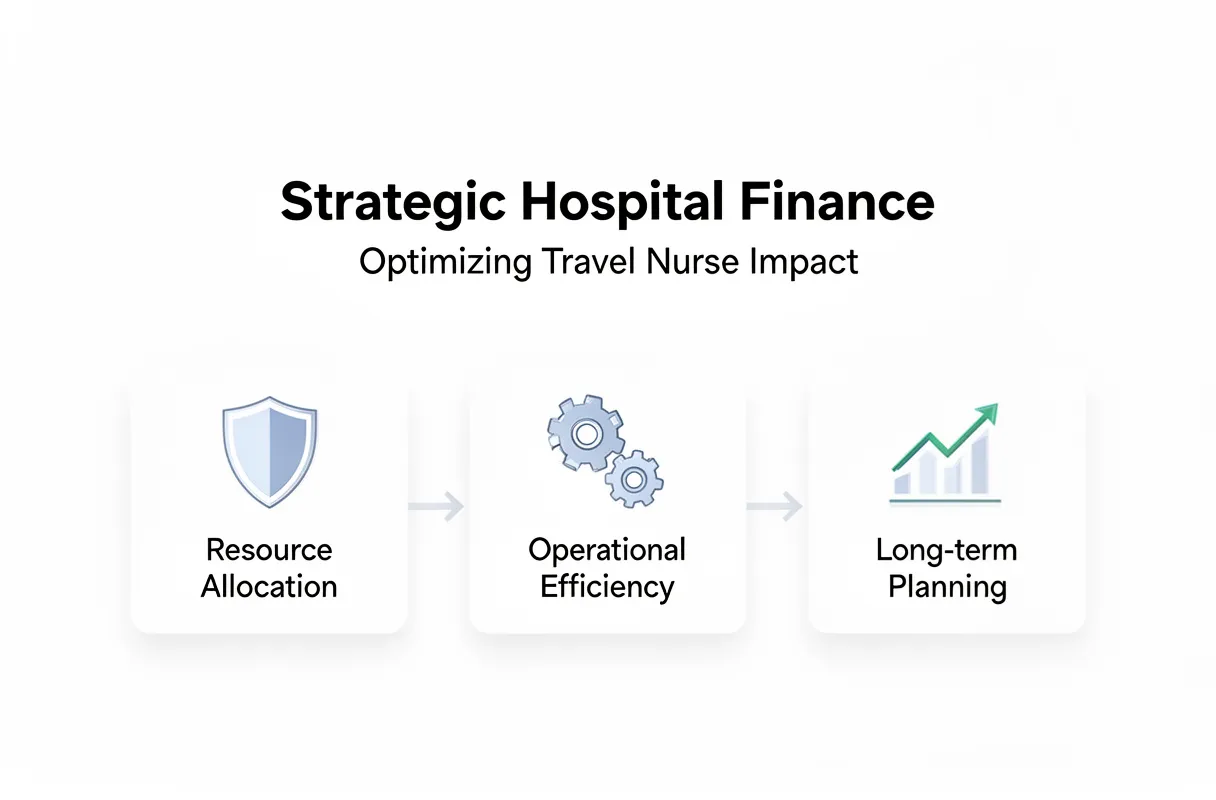
Effective travel nurse management strategies are essential for hospitals seeking long-term sustainability in their hospital finance travel nurses approach. Simply filling immediate vacancies isn't enough; systems must proactively plan to maximize the economic and operational benefits while mitigating potential challenges.
This involves a strategic, integrated approach rather than a reactive one.
Here are key strategies for sustainable travel nursing benefits in 2026 and beyond:
Data-Driven Deployment: Analyze patient census trends, seasonal demands, and specialty-specific needs. Use predictive analytics to forecast staffing requirements, allowing for proactive contract initiation rather than last-minute, high-cost engagements. This prevents overspending on emergency placements.
Strategic Sourcing & Partnerships: Develop strong relationships with a select group of reputable staffing agencies. Negotiate long-term contracts or master service agreements for better rates and dedicated account management. This moves beyond transactional hires to a more collaborative partnership.
Onboarding & Integration Excellence: Streamline the onboarding process for travel nurses. Efficient orientation reduces the ramp-up time, ensuring nurses can contribute to patient care faster and feel more integrated into the team, which can improve job satisfaction and contract renewal rates.
Cost-Benefit Analysis Beyond Per Diems: Look at the total cost of ownership, including recruitment fees, orientation time, and potential impact on permanent staff morale. Compare this against the cost of understaffing, increased overtime for permanent staff, and potential patient care disruptions. This provides a truer picture of the financial impact.
Feedback Loops for Continuous Improvement: Regularly solicit feedback from travel nurses, unit managers, and staffing agencies. Use this input to refine processes, identify systemic issues, and improve the overall travel nurse experience and program effectiveness.
The industry is rapidly evolving. Organizations that view travel nursing as a flexible, strategic workforce solution, rather than just a stopgap, will achieve greater operational stability and financial predictability.
This proactive management ensures that the benefits of travel nursing extend far beyond immediate staffing needs, contributing to the long-term sustainability travel nursing programs.
Optimizing Travel Nurse Deployment for Hospitals
Optimizing travel nurse deployment requires a strategic approach to ensure both financial efficiency and operational stability. Hospitals must move beyond viewing travel nurses as mere temporary fixes and integrate them into their long-term workforce planning.
Strategic Integration and Recruitment
Effective deployment starts with understanding true staffing needs and anticipating surges. Hospitals can attract top travel talent by offering competitive contracts and clear communication about assignment details. This includes outlining patient ratios and facility expectations upfront.
The economic landscape for travel nurses is changing, particularly with evolving legislation. Bills like the One Big Beautiful Bill Act (OBBBA) aim to standardize contract terms and potentially impact how agencies operate and compete. Hospitals need to stay informed about these regulatory shifts to adapt their contracting strategies, ensuring compliance and maximizing value.
Transparent Compensation and Efficient Processes
Understanding travel nurse compensation trends is critical for hospitals to develop competitive offers. This ensures they are not overpaying for skills and that their packages align with market realities, boosting their appeal to high-caliber professionals. For nurses, navigating the complexities of travel nurse pay structures and understanding what drives these figures is equally important for their career and financial planning. Platforms dedicated to this transparency can significantly streamline the search and evaluation process.
Navigating the complexities of travel nurse pay is essential for both employers and professionals. Understanding the economic factors behind their earnings allows healthcare organizations to craft appealing offers, while travelers can better assess their financial opportunities. For those looking to grasp the nuances of this, exploring insights into travel nurse salary provides invaluable context for hospital budgeting and individual career decisions.
Economic Case Study: Texas Medical Center
Consider the Texas Medical Center, a hub that frequently relies on travel nurses to manage fluctuating patient volumes. By implementing a centralized system for vetting and onboarding travel nurses, they reduced administrative overhead by 15% and decreased average placement time by three days. This efficiency, coupled with transparent contract terms that aligned with local market rates, ensured a consistent supply of qualified nurses during peak seasons, directly impacting patient care continuity.
This strategic deployment model, focusing on efficiency and fair compensation, allows hospitals to leverage contingent labor effectively. It ensures that the financial investment in travel nurses translates into tangible benefits for patient care and operational resilience.
Mitigating Indirect Costs: Staff Morale and Retention
Using travel nurses impacts permanent staff morale and retention more than many hospitals realize. Permanent staff burnout can escalate due to workload imbalances and perceived pay disparities with temporary staff. This strain leads to higher turnover costs, including recruitment, onboarding, and lost productivity.
The indirect economic impact of travel nurses extends to the mental toll on your core team. When permanent staff feel overworked or undervalued, their engagement drops. This creates a cycle where more staff leave, increasing demand for expensive travel nurses and further straining those who remain.
However, strategic deployment of travel nurses can actually alleviate this pressure. By filling critical gaps, contingent labor can reduce overload on existing staff, allowing them to focus on their responsibilities without constant crisis mode. This can boost nurse retention costs by creating a more manageable work environment for your permanent team.
Furthermore, travel nursing offers a form of "professional protection" for nurses. This allows them to concentrate on direct patient care, enhancing their confidence. It also expands their career aspirations and provides market leverage. Understanding this dynamic is key to long-term sustainability in travel nursing strategies.
Ready to find your next healthcare travel contract?
Browse curated healthcare travel jobs with transparent pay packages.
Browse Healthcare Travel Jobs