
Multiple Travel Nursing Agencies: Yes or No?
Working with multiple travel nursing agencies means a healthcare traveler registers and actively seeks assignments through several distinct staffing firms simultaneously. This practice aims to connect healthcare travelers to a wider array of contracts and potentially better terms. A travel nursing agency designs healthcare-specific contracts, placing nurses in hospitals, clinics, and other facilities nationwide.
Key Characteristics:
Primary Goal: Significantly expand available assignment options.
Core Mechanism: Access to diverse hospital networks and exclusive contracts.
Main Benefit: Enhanced negotiation power for pay, benefits, and contract stipulations.
Risk Mitigation: Provides backup options in case a primary contract falters.
People often ask if this strategy generates more headaches than opportunities. The reality is the travel nursing landscape has profoundly shifted. Initially, travel agents (including nursing recruiters) often worked for single brick-and-mortar agencies. The internet's rise drove significant growth of hosting agencies for independent contractors, enabling nurses to manage multiple relationships far more easily.
By the end of this guide, you will understand how to strategically leverage multiple agencies to secure ideal travel contracts, maximizing your earning potential without the common pitfalls of disorganization or conflicting offers.
Is Working with Multiple Travel Nursing Agencies Right for You?
A travel nursing agency is essentially a professional matchmaker for healthcare professionals, connecting nurses with temporary assignments at facilities needing their specific skills. Think of them like specialized travel agents, but instead of booking a Caribbean cruise, they're arranging your next critical role in a hospital, clinic, or other healthcare setting.
The core function is simple: they have the job listings, and you have the qualifications. They bridge the gap.
The question of whether to work with multiple agencies arises because the travel nursing career path often involves seeking the best opportunities. Initially, travel agents exclusively worked for single brick-and-mortar firms. The internet changed this dramatically.
The internet's rise drove significant growth of hosting agencies for independent contractors, enabling nurses to manage multiple relationships far more easily.
This evolution means you, as a healthcare traveler, aren't limited to one recruiter. Many nurses find that leveraging several agencies can present a wider array of choices, potentially better pay packages, and greater flexibility in securing their next assignment. It boils down to seeking the most advantageous contract for your career and life goals.
By the end of this guide, you will understand how to strategically leverage multiple agencies to secure ideal travel contracts, maximizing your earning potential without the common pitfalls of disorganization or conflicting offers.
The Strategic Advantages of Multiple Travel Nursing Agencies
Working with multiple travel nursing agencies offers a distinct edge in a competitive market. Primarily, it grants you enhanced negotiation power, as a larger pool of opportunities means recruiters are more motivated to offer top dollar and favorable terms. This isn't just about getting paid more, though that's a significant perk; it's about actively shaping your career path.
The benefits extend to unparalleled career flexibility and a broader spectrum of choices. Different agencies forge unique relationships with hospitals, meaning their available assignments won't perfectly overlap. By engaging with several, you gain access to a significantly wider range of available assignments and travel options, allowing you to pinpoint roles that perfectly match your specialty, desired location, and preferred contract length. Imagine finding that perfect assignment in your dream city, simply because one agency had the inside track.
Furthermore, a multi-agency approach bolsters your job security. Should one agency's contract fall through due to unforeseen circumstances at a facility, or if a recruiter suddenly becomes unresponsive, you have other avenues to pursue. This built-in redundancy acts as a crucial safety net, offering peace of mind and ensuring a smoother transition between assignments. It’s a proactive strategy for maintaining consistent employment and protecting your professional momentum.
Increased Opportunities: Access to a larger inventory of jobs than any single agency can provide.
Better Pay and Benefits: More offers mean you can compare packages and negotiate higher compensation.
Location Diversity: Find assignments in your preferred cities or states, not just what one agency has available.
Specialty Match: Secure roles that align perfectly with your specific skills and experience.
Assignment Security: A backup plan exists if your primary contract faces unexpected issues.
By strategically leveraging multiple agencies, you can significantly improve your odds of landing the ideal travel contract, optimizing your earning potential and overall experience. You are no longer limited by one recruiter's network; you are tapping into a broader industry landscape. For a deeper understanding of how these choices impact your finances, explore our detailed breakdown on travel nurse salary.
Maximizing Your Pay and Assignment Choices
Access to more travel nursing agencies directly translates to a bigger paycheck and more assignment choices. Relying on a single agency limits your exposure to available contracts and pay packages.
Comparing offers from multiple sources is where the real financial advantage lies. Instead of accepting the first offer, you can play agencies against each other to secure higher rates.
Single Agency vs. Multiple Agencies
Aspect | Single Agency | Multiple Agencies |
|---|---|---|
Number of Offers | Limited to one recruiter's network | Access to a wider pool of opportunities |
Pay Range | Dictated by one agency's client relationships | Greater potential for higher rates through comparison |
Location Variety | Restricted by agency contracts | Access to diverse geographical opportunities |
Specialty Match | Dependent on a single agency's focus | Increased chances of finding niche assignments |
This strategic approach puts you in the driver's seat for travel nurse salary negotiation. You gain more control over desired locations, specialties, and even contract lengths, ensuring your assignments align with your professional goals and financial needs.
Because each agency has unique relationships with different healthcare facilities, working with several means you're not missing out on potentially lucrative contracts. It's about maximizing assignment variety and ensuring you always have competitive options at your fingertips.
The Downsides and Practical Challenges of Multi-Agency Relationships
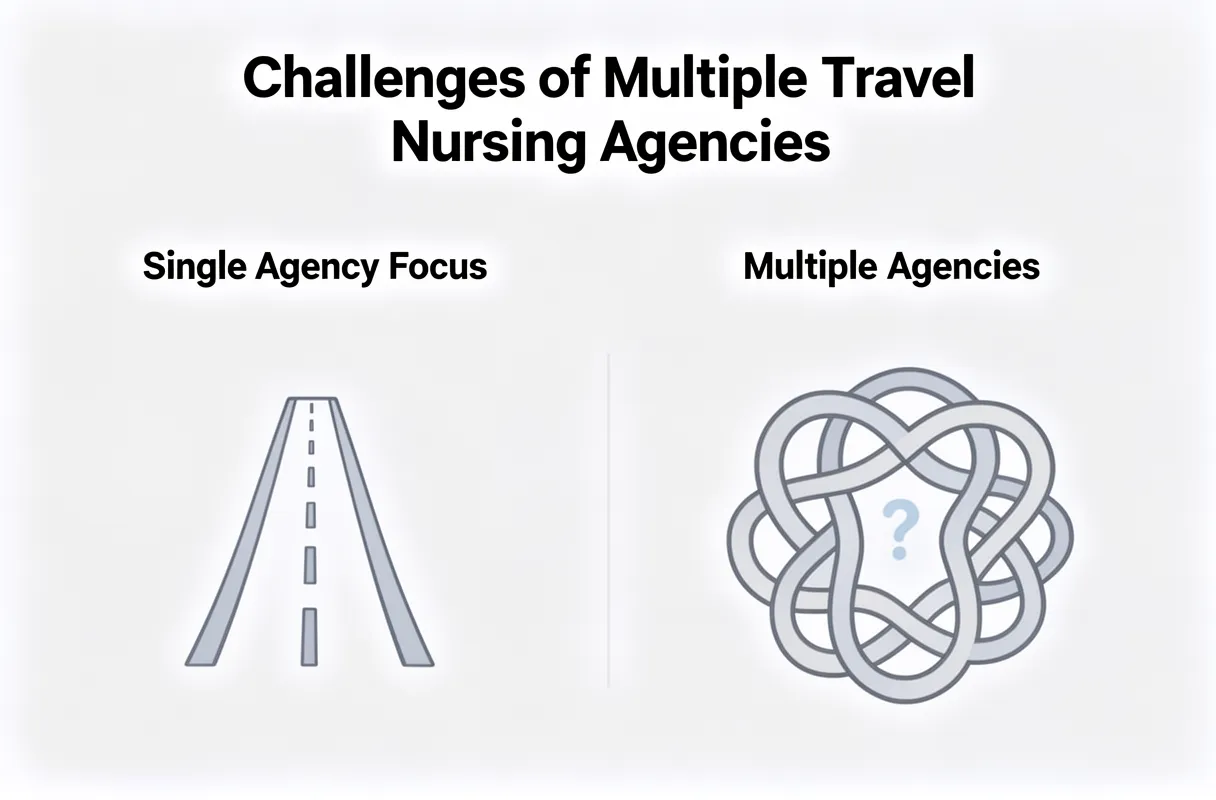
Navigating multiple travel nursing agencies, while offering advantages, introduces significant practical hurdles and potential drawbacks. The sheer volume of communication can quickly become overwhelming, turning a strategic advantage into a logistical nightmare.
This often leads to recruiter overload, where you’re juggling calls, emails, and texts from several different contacts, each with their own processes and timelines. It feels less like a coordinated effort and more like a constant barrage of information to filter.
Duplicated efforts are another common pitfall. Without a clear system, different agencies might submit your profile for the same position, leading to confusion for the facilities and potentially burning bridges with recruiters. You risk submitting inconsistent information or having your profile appear multiple times, which can signal disorganization.
Moreover, the varied requirements and vetting processes of each agency add complexity. Keeping track of each recruiter's preferred documentation, submission deadlines, and specific contract nuances requires meticulous organization. It's like trying to manage several different employers simultaneously, each with its own HR department and onboarding procedure.
While specific to general travel agents, the overarching concept of potential downsides, such as fees and agency-driven incentives, often parallels challenges in the travel nursing sphere. Some recruiters might push contracts that offer them higher commissions rather than prioritizing your best interests, potentially masking hidden fees or less favorable terms. It's crucial to be aware that not all agencies operate with the same level of transparency, and understanding these varying dynamics is key to avoiding unwelcome surprises.
Mitigating Recruiter Overload and Communication Gaps
Managing multiple recruiters can feel like juggling flaming torches; it’s easy to drop one. Keeping lines of communication clear prevents chaos and ensures you're always fielding the best opportunities. Setting clear expectations from the outset is paramount.
Define your preferred communication methods and response times. A simple text message might work for quick updates, while a phone call is better for discussing complex contract details. Be upfront about your availability for calls and aim to respond to recruiters within a 24-hour window. This shows professionalism and keeps you top-of-mind.
Create a simple tracking system. A spreadsheet or a dedicated app can list each recruiter's name, agency, contact details, and notes on your last conversation or specific job inquiries. This prevents duplicated applications and ensures you're asking relevant questions each time.
Treat each recruiter interaction as a focused appointment. Don't let them bleed into your personal time or shift focus from your primary job. Schedule dedicated slots for "agency check-ins" to handle inquiries efficiently.
This structured approach is key to avoiding the common pitfall of sending out identical applications through multiple channels. It's about organized efficiency, not just chasing every lead.
Preventing Conflicts of Interest and Inconsistent Information
Navigating multiple travel nursing agencies means actively guarding against conflicts of interest and inconsistent information. This is essential to protect your reputation and ensure fair compensation.
The primary concern is multiple agencies submitting you for the same role. This looks unprofessional to facilities and can lead to confusion. To prevent this, always inform every recruiter you are actively working with about the specific jobs you've applied for and where. Maintain a clear list of these applications.
When agencies present contract offers, you might encounter inconsistent contract pricing for seemingly similar roles. This often stems from varying markups or how they factor in benefits. Always ask for a full, transparent breakdown of the pay package, including base rate, stipends, and benefits costs.
A critical step is to only authorize one agency to submit your profile for any given position. This is non-negotiable. If you find an agency pushing for exclusive rights without transparency, it's a red flag.
Verify information meticulously. Agencies should have your current certifications, licensure, and experience details readily available. If one agency provides a drastically different pay rate for a role compared to another, dig deeper to understand the discrepancy.
Communicate Openly: Inform all active recruiters about your submitted jobs.
Demand Transparency: Insist on detailed pay package breakdowns.
Grant Exclusive Submission: Allow only one agency per specific job opening.
Cross-Reference Data: Verify your profile information is consistent across all agencies.
And remember, if an agency can't provide clear answers or seems to obscure details, they might not be the best partner for your career.
Implementing Effective Strategies for Multi-Agency Management
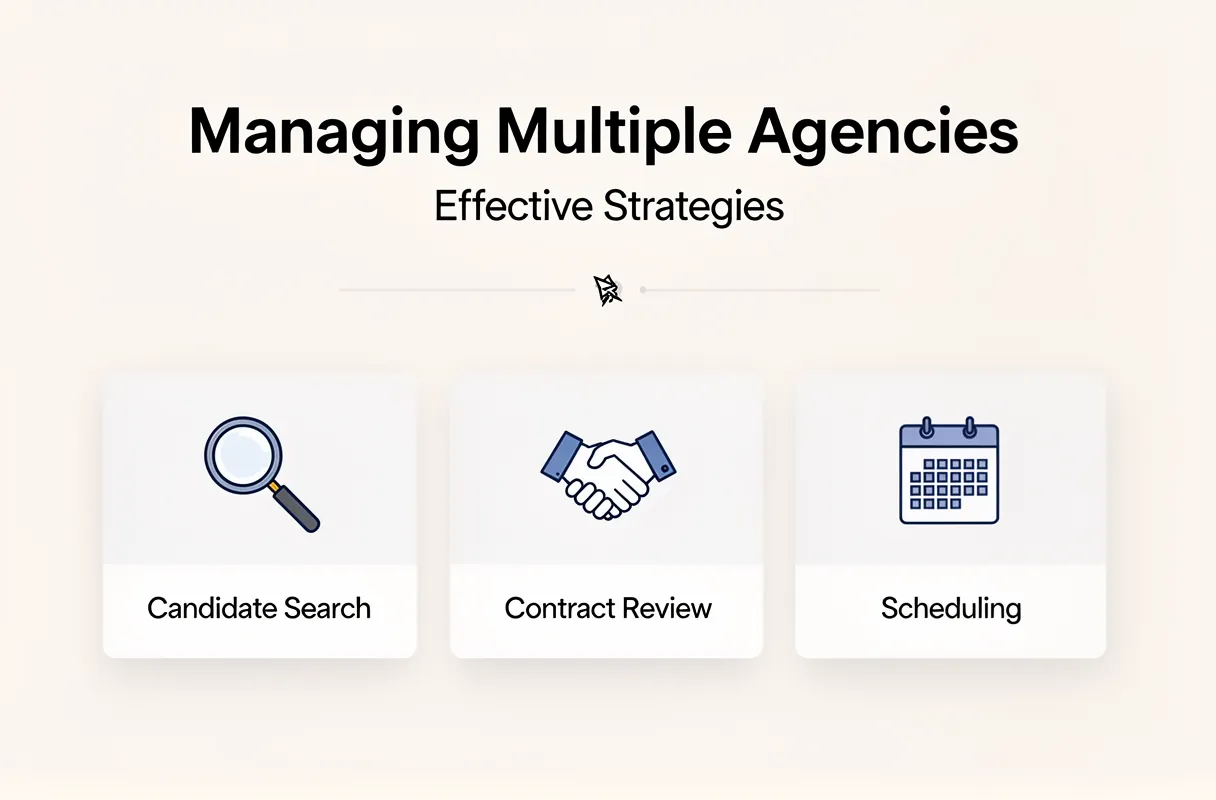
Standing the discrepancy requires a structured approach to juggling multiple agencies.
A Multi-Agency Management Framework
Effectively managing multiple travel agencies isn't about luck; it's about implementing smart, repeatable processes. This framework ensures you stay in control, maximizing opportunities without feeling overwhelmed.
Step 1: Centralize Your Communication Hub
Designate a single point of contact within your team, or yourself if you’re a solo traveler, for all agency communications. This prevents conflicting messages and ensures consistency.
Schedule Agency Check-ins: Set specific, limited times each week (e.g., Tuesdays and Thursdays, 10-11 AM) for calls or emails with recruiters.
Define Preferred Channels: Clearly state your preferred method of communication (e.g., email for documentation, text for urgent updates) and enforce it.
Maintain a Master Contact List: Keep a centralized spreadsheet or CRM with agency contacts, their specialties, and notes on past interactions. This avoids duplicate outreach.
Step 2: Standardize Information Sharing
When you work with multiple agencies, inconsistent information is a major time sink. You need a way to ensure everyone has the same, accurate picture.
One Submission Per Job: Strictly enforce that each job opening is submitted by only one agency. This avoids competing offers for the same role and prevents awkward conversations.
Profile Consistency: Ensure your resume and profile details are identical across all agencies. This prevents recruiters from submitting outdated or incorrect versions of your CV.
Transparent Application Tracking: Maintain a clear record of which jobs you've applied for, through which agency, and their current status.
Step 3: Implement a Clear Workflow
A predictable workflow helps manage expectations for both you and the recruiters.
Initial Contact & Needs Assessment: When a recruiter reaches out, confirm their agency and the specific role they are referencing.
Submission Confirmation: If you agree to a submission, immediately note it in your tracking system and inform other active recruiters of your application for that specific role.
Offer Evaluation: When an offer arrives, consolidate all details and compare them objectively. Use our platform’s tools to compare full pay packages side-by-side.
Decision Communication: Inform all involved agencies of your decision promptly and professionally.
This systematic approach to travel agency management is the cornerstone of a streamlined travel nurse job search.
Leveraging Technology to Streamline Your Job Search
Technology transforms the arduous multi-agency job search into a manageable process. Today's travel healthcare professionals can leverage specialized platforms to consolidate opportunities, compare offers, and apply efficiently.
These travel nurse job search platforms act as a central hub, aggregating contracts from numerous vetted staffing agencies. This eliminates the need to scour individual agency websites or rely solely on recruiter outreach. You can browse a wide array of travel nursing technology, directly comparing full, transparent pay packages side-by-side.
Our platform, MedNomadJobs, is built to simplify this. You can:
Browse travel healthcare contracts from vetted staffing agencies.
Compare full, transparent pay packages side-by-side.
Filter jobs by specialty, state, and desired pay.
Set up free job alerts to get notified of new matching assignments daily or weekly.
Apply directly to contracts without hidden fees or intermediaries.
This approach cuts submission time from 40+ hours to mere minutes per application. Instead of manually entering your details across multiple portals, these tools automate much of the initial process. For those looking to gain a deeper understanding of the offers they receive, you can explore the nuances of travel nurse contracts and what to scrutinize before signing.
This centralization reduces the risk of duplicate applications and ensures you're always seeing the most up-to-date listings. Ultimately, effective travel nursing technology frees you from administrative burdens, allowing you to focus on securing your next ideal assignment.
Understanding and Comparing Agency Contracts
When multiple agencies present offers, careful contract review is non-negotiable. Each agreement outlines the specifics of your temporary employment, and overlooking details can lead to significant headaches later.
You need to dissect the pay structure. Is it an hourly rate, a blended rate, or does it include per diems? Understand precisely how the housing stipend works – is it a fixed amount, reimbursement-based, or agency-provided housing? Many contracts also include clauses regarding overtime, holiday pay, and on-call responsibilities that can impact your overall earnings.
Beyond pay, scrutinize the benefits package. Health insurance, dental, vision, and retirement plans vary wildly. Check the waiting periods for eligibility and the coverage details. Also, be aware of cancellation clauses on both sides. What happens if you need to leave an assignment early, or if the facility cancels on you? These terms can have financial consequences.
Legal implications arise if you sign contracts with overlapping dates or conflicting terms with different agencies. This is a recipe for disaster, potentially violating agreements and damaging your reputation. It's also wise to look for non-compete clauses, though these are less common for travel nurses than in other industries.
Always ask questions. If a clause is unclear, or if you need clarification on how a particular benefit functions, contact the agency recruiter immediately. Don't be afraid to request amendments if something is not acceptable. For instance, understanding license requirements in Compact License States is crucial when considering contracts from multiple agencies across different regions.
Key Contract Elements to Compare
Pay Rate & Structure: Hourly, blended, overtime, holiday pay.
Benefits: Health, dental, vision, life insurance, retirement plans.
Housing: Stipend amount, type (reimbursement, agency-provided), and any associated fees.
Per Diems: Taxable vs. non-taxable components.
Cancellation Policy: Terms for facility or traveler termination.
Licensure/Certification Reimbursement: What's covered?
Mileage/Travel Reimbursement: For initial travel to assignment.
Completion Bonus: If applicable.
Non-Compete/Non-Solicitation: Are there restrictions after the contract ends?
Guaranteed Hours: What if the facility cancels hours?
The Bottom Line: Treat each agency contract like a binding legal document, because it is. Your diligence now prevents future problems.
Expert Recommendations: When to Pursue Multiple Agencies
Working with multiple travel nursing agencies can significantly amplify your career opportunities, but it's not a one-size-fits-all approach. Pursuing several agencies benefits nurses who are highly organized, proactive in their job search, and seeking maximum market exposure. This strategy is particularly advantageous for those in high-demand specialties where positions fill rapidly, or for travelers who are flexible on location and willing to explore diverse assignment types. Experienced travelers often find success by diversifying their agency portfolio, as they understand contract nuances and can quickly assess opportunities.
Conversely, newer travelers or those who prefer a more streamlined, less time-intensive process might find managing one strong agency relationship sufficient. The broader travel agency industry, including its market size and growth forecasts, provides a backdrop to the competitive landscape travel nurses navigate, with forecasts available from 2017 to 2030 according to Statista.
Here's a decision-making checklist to gauge if multiple agencies are right for you:
Experience Level: Are you a seasoned traveler comfortable managing multiple contracts and recruiters?
Organizational Skills: Can you track deadlines, benefits, and communication across several platforms without missing a beat?
Career Goals: Are you actively seeking rapid career growth, niche opportunities, or specific experience that might only be available through broader agency access?
Market Demand: Is your specialty experiencing a significant talent shortage, creating more options and urgency?
Time Commitment: Are you prepared to invest the extra time required for onboarding, credentialing, and communication with multiple agencies?
The Expert Opinion: For most travel nurses, especially those in high-demand fields like critical care or specialized imaging, working with 2-3 agencies is the sweet spot. It provides ample choice without becoming overwhelming.
Our platform is built to simplify this by allowing you to compare offers from multiple vetted agencies side-by-side, ensuring you have transparency and control over your career path.
Ready to find your next healthcare travel contract?
Browse curated healthcare travel jobs with transparent pay packages.
Browse Healthcare Travel Jobs